
East End Gaming: Your Complete Guide to London’s Premier Gaming Hub in 2026
London’s East End has transformed from industrial heartland into one of Europe’s most vibrant gaming communities. Walk through Shoreditch, Hackney, or Stratford today and you’ll find esports arenas, retro arcades, and gaming cafés packed with players grinding ranked matches, practicing speedruns, or just vibing with friends over couch co-op classics.
This isn’t some corporate-driven fad. The East End gaming scene grew organically, built by passionate communities who turned dingy basements into LAN party havens and converted old warehouses into competitive gaming venues. By 2026, it’s become a destination for anyone serious about gaming in the UK, whether you’re chasing tournament glory, streaming to a growing audience, or simply looking for your tribe.
This guide breaks down everything you need to know about East End gaming: where to play, who’s shaping the scene, which events matter, and how to immerse yourself.
Key Takeaways
- East End gaming has grown into a thriving grassroots community with 15+ dedicated venues across Hackney, Tower Hamlets, Newham, and Waltham Forest, offering everything from competitive esports arenas to retro arcades.
- The East End gaming scene prioritizes competitive FPS and fighting games, with Counter-Strike 2 and Tekken 8 dominating tournaments, while maintaining a welcoming environment through community-organized events like Fight Night Fridays and monthly beginner sessions.
- Major annual events including the East End Open (July), Stratford FPS Invitational (November), and East London Tekken Tournament (March) draw hundreds of players and offer prize pools up to £50K, attracting both aspiring and professional competitors.
- Newcomers can easily join the East End gaming community through Discord servers like the Hackney Gaming Collective (10K+ members), free beginner-friendly events at venues, and by visiting affordable gaming cafés with day passes ranging from £25-40.
- The scene maintains grassroots authenticity by carefully vetting corporate sponsorships, supporting independent venues, and expanding youth programs that combine competitive gaming with career guidance and mental health support.
- Future East End gaming growth will emphasize hybrid tournament formats, VR integration, mobile esports zones, and content creator partnerships while preserving the community-first values that distinguish it from corporate-driven UK gaming regions.
What Is East End Gaming?
East End Gaming refers to the collective gaming culture, venues, communities, and competitive scenes thriving across East London boroughs, primarily Hackney, Tower Hamlets, Newham, and Waltham Forest. It’s not a single organization or branded entity: it’s an ecosystem.
The area hosts dozens of gaming venues ranging from high-end esports arenas with 240Hz monitors and tournament-grade peripherals to cozy retro bars where you can play Street Fighter II on original arcade cabinets. The demographic skews younger (18-35), diverse, and tech-savvy, reflecting the East End’s broader creative and digital industries boom.
What sets East End gaming apart from other UK scenes is its grassroots authenticity. Manchester has bigger corporate-backed venues, Birmingham has solid tournament infrastructure, but the East End built its reputation through word-of-mouth, Discord servers, and players who genuinely love the culture. The scene supports nearly every genre: FPS tournaments draw Counter-Strike 2 and Valorant sweats, fighting game communities run weekly brackets for Tekken 8 and Street Fighter 6, and indie game developers regularly showcase work at local meetups.
The East End’s proximity to London’s financial and tech sectors also means better sponsorship opportunities, faster internet infrastructure (crucial for competitive play), and access to international players visiting the UK. It’s where casual Friday-night Mario Kart sessions coexist with semi-pro teams bootcamping before regional qualifiers.
The History and Evolution of East End Gaming
From Arcade Roots to Modern Gaming Culture
The East End’s gaming story begins in the early 1980s, when arcade machines started appearing in chippy shops and corner stores across Bethnal Green and Whitechapel. These weren’t glamorous destinations, just Pac-Man and Space Invaders cabinets wedged between cigarette vending machines. But they planted seeds.
By the late 90s and early 2000s, internet cafés exploded across the area, serving immigrant communities who needed affordable web access but also catering to teenagers playing Counter-Strike 1.6 until 3 AM. Places like Net Zone in Stratford and Cyber Hub in Whitechapel became unofficial esports training grounds years before esports was even a term.
The 2012 London Olympics brought massive regeneration to Stratford and surrounding areas. New infrastructure, fiber-optic internet, and an influx of young professionals created the perfect conditions for a gaming renaissance. Around 2014-2016, purpose-built gaming venues started opening, not just internet cafés, but dedicated spaces with tournament setups, streaming rooms, and community event calendars.
Key Milestones in the East End Gaming Scene
Several moments define the East End’s gaming evolution:
2015: Loading Bar opened in Dalston, one of London’s first gaming-themed bars combining craft beer with console stations and board games. It proved the commercial viability of gaming venues as social spaces.
2017: The Stratford Esports Arena launched with 50 gaming stations and regular tournament hosting, becoming the East End’s first venue explicitly built for competitive play.
2019: East End FGC (Fighting Game Community) hosted its first major tournament, drawing over 200 entrants and establishing the area as a UK fighting game hub.
2021: During COVID-19 lockdowns, East End communities pioneered hybrid events mixing in-person play with streaming, keeping the scene alive when other regions went dormant.
2024: The Hackney Gaming Collective formed, uniting independent venues under a shared calendar and cross-promotion network, significantly boosting attendance and sponsorship deals.
2026 (current): The scene now includes 15+ dedicated gaming venues, monthly tournaments across multiple titles, and a thriving content creator ecosystem with several streamers hitting 100K+ followers.
Top Gaming Venues and Locations in East End London
Premier Esports Arenas and Gaming Cafés
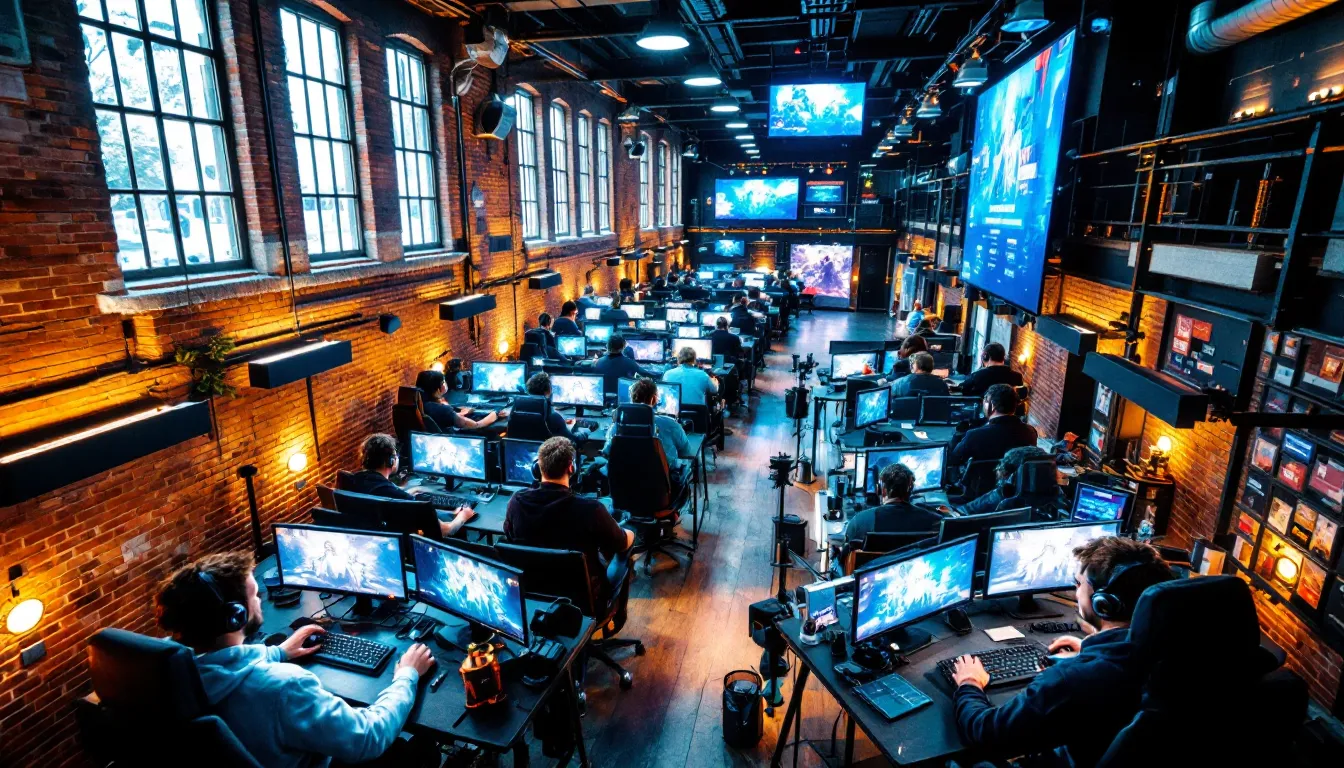
Stratford Esports Arena (Stratford) remains the East End’s flagship competitive venue. Fifty high-spec PCs (Intel i7-13700K, RTX 4070 Ti, 240Hz 1440p monitors), dedicated console stations for fighting games, and a main stage with broadcast equipment. They host weekly Counter-Strike 2 leagues and monthly Valorant opens. Day passes run £8/hour, tournament entry typically £15-25.
Hackney Pixels (Hackney Central) offers a more boutique experience, 20 gaming stations in a converted warehouse with excellent coffee and a focus on community over grind. They emphasize indie games and co-op nights alongside competitive play. Popular with streamers for its aesthetics and natural lighting. £10/hour or £40 day pass.
Tower Hamlets Gaming Hub (Canary Wharf) caters to the after-work crowd: professionals unwinding with League of Legends or Rocket League before heading home. Premium setup (ASUS PG27AQDM OLEDs, Herman Miller chairs) but pricier at £15/hour. They run corporate team-building events during weekdays.
Newham Game Space (East Ham) is the most accessible venue, targeting younger gamers and families. Console-heavy (PS5, Xbox Series X, Switch setups), cheaper rates (£6/hour, £25 day pass), and a strong Fortnite/Apex Legends community. They also offer coaching sessions for competitive players.
Most venues have shifted to prebooking systems via apps or Discord servers following the esports gaming stations model that’s proven effective in other regions.
Retro Arcades and Specialty Gaming Bars
Four Quarters (Peckham, with East End pop-ups) brings arcade nostalgia: 30+ classic cabinets including Donkey Kong, Galaga, and Mortal Kombat II. £5 entry gets unlimited plays. They rotate locations for special events in Hackney and Shoreditch.
The Player’s Lounge (Shoreditch) combines craft cocktails with retro gaming. N64 stations at every booth, GameCube tournaments on Thursdays, and a killer soundtrack. It’s more bar than gaming venue, but the vibe is unmatched for casual sessions.
Arcade Club London (Stratford Westfield area) is the newest addition, a massive space with 100+ machines spanning arcade history from the 70s to modern rhythm games. £15 entry for all-day play. They’ve partnered with gaming culture publications for retro gaming documentary screenings.
Pixel Bar East (Bethnal Green) focuses on fighting games exclusively. Eight arcade cabinets (Street Fighter, Tekken, KOF) plus modern console setups. Free entry, pay for drinks, with serious weekly brackets that occasionally feature UK pro players.
Major Gaming Events and Tournaments in the East End
Annual Competitive Gaming Championships
East End Open (July) is the region’s premier multi-game tournament. 2025 featured Counter-Strike 2, Valorant, Tekken 8, and Street Fighter 6 brackets with £50K total prize pool. The 2026 edition (scheduled for July 18-20) adds Rocket League and a mobile gaming division. Open to all skill levels with amateur and pro brackets. Registration opens in May through the Hackney Gaming Collective’s Discord.
Stratford FPS Invitational (November) brings the UK’s top Counter-Strike and Valorant teams for a three-day LAN event. Invite-only for top 8 teams, with regional qualifiers running September-October. Prize pool typically hits £30K.
East London Tekken Tournament (March) is the UK’s second-largest Tekken event after Birmingham’s nationals. 200+ entrants in 2025, with notable players like RaphaelDDG and Problem X making appearances. Entry is £20, spectator passes £5.
Indie Game Showcase (September) highlights local game developers. Not competitive, but crucial for the scene’s creative side. 2025 featured 40 studios demoing upcoming titles, with several securing publisher deals afterward.
Community Meetups and LAN Parties
Weekly and monthly events keep the community engaged between majors:
Fight Night Fridays at Pixel Bar East, free-entry fighting game brackets starting 7 PM. Usually 30-50 players across Street Fighter 6, Tekken 8, and Guilty Gear Strive.
CS:GO Saturdays at Stratford Esports Arena, community 5v5 tournaments, £10 entry per team, winner takes pot. Skill-based divisions prevent smurfing.
Retro Game Night at The Player’s Lounge (second Thursday monthly), speedrun attempts, co-op challenges, and nostalgic tournaments for games like GoldenEye 007 and Mario Kart 64.
Hackney LAN Party (quarterly), bring-your-own-rig events at various warehouses. The December 2025 event drew 150 players for a 48-hour gaming marathon. Organized entirely through Discord with minimal commercial backing.
The East End also sees international visitors during major UK tournaments. When London hosts international Dota 2 or League of Legends events, East End venues run viewing parties with local casters providing analysis. These consistently pull 200+ attendees and often feature gaming news coverage for notable matches.
The East End Gaming Community: Who’s Playing?
Demographics and Player Profiles
The East End gaming scene is younger and more diverse than the UK gaming average. A 2025 community survey (conducted by the Hackney Gaming Collective with 1,200+ responses) revealed:
- Age: 62% between 18-29, 28% between 30-39, 10% other ages
- Gender: 68% male, 24% female, 8% non-binary or other
- Ethnicity: Significantly more diverse than the UK gaming average, 38% White British, 22% Black or Black British, 18% Asian or Asian British, 22% mixed or other backgrounds
- Platform preference: 47% PC, 31% console, 15% mobile, 7% retro/arcade
- Play style: 41% casual, 34% competitive but not pro, 18% aspiring pro, 7% professional or semi-pro
The diversity reflects the East End’s broader demographics and creates a welcoming environment. Several venues actively run women-only and LGBTQ+ gaming nights to combat toxicity that plagues online gaming.
Player profiles vary by venue. Stratford Esports Arena attracts serious competitive players, you’ll see teams running scrims, reviewing VODs, and practicing utility lineups. Hackney Pixels draws content creators and creative types who value community over pure competition. Newham Game Space is younger, with students and teens dominating attendance on weekends.
Notable Local Streamers and Pro Players
RaphaelDDG (Tekken 8, Street Fighter 6), UK’s top-ranked Tekken player in 2025, regularly competing internationally. Grew up playing at East End arcades and still hosts weekly training sessions at Pixel Bar East.
PixelQueenLDN (Variety streamer, 180K Twitch followers), started streaming from Hackney Pixels in 2020, now runs charity events supporting local youth gaming programs. Known for wholesome content and community interaction.
ThamesTactical (Counter-Strike 2), semi-pro team based in Stratford, competed in ESL Challenger League Season 47. Three of five members work day jobs in Canary Wharf and practice evenings at Tower Hamlets Gaming Hub.
EastEndEmma (League of Legends, content creator), 45K YouTube subscribers, focuses on educational content helping players climb ranked. Regular contributor to gaming guides and walkthroughs with her accessible coaching style.
StratLads (Rocket League), five-person team that qualified for RLCS regional playoffs in 2024. They practice exclusively at Stratford Esports Arena and credit the venue’s infrastructure for their improvement.
The scene also includes dozens of smaller streamers (5K-20K followers) who collaborate regularly, raid each other’s channels, and organize community events. This interconnectedness prevents the cliquishness that stifles some gaming communities.
Popular Games and Genres in the East End Scene
FPS games dominate competitive play. Counter-Strike 2 remains king, with every major venue hosting regular tournaments and leagues. The game’s skill ceiling and tactical depth appeal to the East End’s competitive culture. Valorant is close behind, especially among younger players and those transitioning from console shooters.
Fighting games have an outsized presence compared to other UK regions. The East End FGC runs consistent brackets for Tekken 8, Street Fighter 6, Guilty Gear Strive, and Mortal Kombat 1. The community benefits from veteran players who mentor newcomers, preventing the gatekeeping that kills other FGC scenes.
MOBAs are popular but less organized competitively. League of Legends and Dota 2 have dedicated player bases who use venues for ranked grinds and VOD reviews rather than formal tournaments. Several Diamond+ and Master-tier players regularly play at Tower Hamlets Gaming Hub and Hackney Pixels.
Battle royales see mixed engagement. Apex Legends maintains a loyal following with weekly custom lobby events at Newham Game Space. Fortnite skews younger and mostly plays out in homes rather than venues, though Newham runs youth tournaments quarterly. PUBG has largely faded from the scene.
Rocket League is growing fast. The game’s accessibility (easy to learn, impossible to master) and cross-platform play make it perfect for community events. Several venues run 2v2 and 3v3 leagues with ranking systems similar to esports sports.
Retro gaming thrives in specialty venues and during themed nights. Classics like Street Fighter II, GoldenEye 007, Mario Kart 64, and Tekken 3 see regular tournament play. Speedrunning communities occasionally hold meetups to attempt PB (personal best) runs on retro titles.
Indie games get showcased during developer meetups but rarely see competitive play. The East End’s creative community includes several game developers who use local venues for playtesting and feedback sessions.
Platform-wise, PC dominates serious competitive play, but consoles have strong representation in fighting games (where input lag and controller preference matter) and casual/retro gaming. Mobile gaming exists primarily through personal play rather than venue-based sessions, though some cafés now offer charging stations and comfortable seating for mobile gamers.
How to Get Involved in East End Gaming
Finding Your Gaming Community
Start with Discord servers. The Hackney Gaming Collective server (10K+ members) is the central hub with channels for every major game, venue announcements, and LFG (looking for group) posts. Search “East End Gaming Discord” and you’ll find it.
Most venues run beginner-friendly events monthly. Stratford Esports Arena hosts Newbie Nights (first Thursday of every month) where experienced players coach newcomers in CS2, Valorant, and League. No judgment, no toxicity, just people helping people improve.
For fighting games, join East End FGC through their Discord or show up to Fight Night Fridays at Pixel Bar East. The community actively encourages new players, with veterans offering free coaching and practice sessions. Don’t worry about getting bodied, everyone starts there.
Social media matters. Follow venues on Instagram and Twitter for event announcements, last-minute changes, and community highlights. Hashtags like #EastEndGaming and #LondonEsports surface relevant content.
If you’re not in London yet, several East End streamers offer online gaming communities where you can connect before visiting in person. PixelQueenLDN and EastEndEmma regularly host Discord hangouts for remote players.
Tips for First-Time Visitors
Book ahead. Walk-ins work at some venues, but weekends and evenings get packed. Most venues use booking apps or Discord reservation systems.
Start with a day pass. Hourly rates add up fast if you’re grinding for 4+ hours. Day passes (£25-40 depending on venue) offer better value and eliminate clock-watching.
Bring ID. Most venues are 16+, some are 18+. Alcohol-serving establishments strictly enforce age restrictions.
Ask questions. Staff and regulars genuinely want to help. Need help with a specific mechanic? Looking for teammates? Just ask, the East End scene’s reputation for friendliness isn’t hype.
Mind the etiquette. Don’t hog stations during peak hours if you’re just browsing social media. Clean up your space. Respect other players’ focus during competitive sessions. Trash talk is fine in good fun, but toxicity gets shut down fast.
Try multiple venues. Each has a distinct vibe. Stratford is competitive and intense, Hackney Pixels is chill and creative, Newham is casual and accessible, Tower Hamlets is professional and polished. Visit a few to find your fit.
Check event calendars. Showing up during a tournament when you want casual play (or vice versa) creates frustration. Most venues post monthly calendars on Discord and social media.
Budget accordingly. Venue time (£6-15/hour), food/drinks (most venues have snacks/beverages), and potential tournament entry fees (£10-25) add up. Plan for £40-60 for a solid day of gaming including entry and food.
The Future of East End Gaming: Trends and Predictions
VR integration is coming. Several venues are testing dedicated VR spaces for games like Beat Saber competitive leagues and VR esports titles. Hackney Pixels announced plans for a 10-station VR arena opening Q3 2026.
Mobile esports will grow. With titles like Honor of Kings and PUBG Mobile gaining competitive legitimacy, expect East End venues to create dedicated mobile gaming zones with tournament-grade devices and controlled environments.
Hybrid events are here to stay. The pandemic proved that combining in-person attendance with streaming expands reach without sacrificing the LAN experience. Future tournaments will default to dual formats, increasing prize pools through online entry fees while maintaining in-person finals.
Corporate sponsorship is increasing but carefully managed. The scene’s grassroots identity is fiercely protected, so venues vet sponsors to avoid sellout accusations. Energy drinks, peripheral companies, and gaming hardware brands are welcome: betting sites and predatory monetization schemes get rejected.
Venue consolidation vs. expansion is the big question. Will the Hackney Gaming Collective evolve into a formal business entity owning multiple venues, or will independent spots maintain autonomy? Current sentiment favors the collective remaining a coordination network rather than a corporate structure.
Content creator support will formalize. Several venues now offer streaming-friendly setups with green screens, quality lighting, and soundproofing. Expect creator partnerships where venues provide space in exchange for promotion, creating symbiotic relationships that boost both parties.
Youth programs are expanding. Recognizing gaming’s career potential (pro players, streamers, developers, tournament organizers, coaches), venues are launching training programs for teens. These combine gameplay coaching with business skills, mental health support, and career guidance.
Game diversity will increase. While FPS and fighting games dominate now, RTS (real-time strategy) and TCG (trading card game) communities are organizing. A dedicated TCG café is rumored for Hackney in late 2026, focusing on Magic: The Gathering and Pokémon competitive play.
Infrastructure upgrades are inevitable. As games demand more performance (Unreal Engine 5 titles, higher refresh rates, better peripherals), venues will need continuous hardware investment. Expect subscription models or membership tiers to fund these upgrades.
The East End gaming scene’s trajectory points toward sustainable growth rooted in community values rather than explosive commercialization. Players want spaces that prioritize culture over profit margins, and venue operators seem committed to maintaining that balance.
Conclusion
East End Gaming in 2026 represents what gaming culture looks like when communities build it themselves. No corporate blueprint, no franchise model, just players creating spaces where they actually want to spend time.
Whether you’re chasing tournament wins, looking for consistent practice partners, or just want a place to game that isn’t your bedroom, the East End delivers. The venues are solid, the events are well-run, and the community genuinely welcomes newcomers willing to engage respectfully.
The scene will keep evolving, new venues, bigger tournaments, more sponsorship money. But if it maintains the grassroots ethos that got it here, the East End will remain one of the UK’s best gaming destinations for years to come. Show up, play some games, and you’ll see what the hype is about.